
And how to fix it.

Are You Worried Your Branding Is Confusing?
Trying to build a brand can be a challenge for small business owners. It’s not always possible to pay the professionals. Sometimes it’s simply got to be a case of making do. I’ve been there. In the early days of my small business, I called in favours, begged friends and watched tutorials to muddle my way through creating a brand. What resulted was a confusing brand with no clear identity. We weren’t recognisable, cohesive or consistent. I have since got the hang of branding and created a coherent brand that stands out. The best bit is that I did so without paying anyone else.
Here are some signs that your branding may not be as clear as it could be…
1- You Don’t Know Who Your Ideal Customer Is
You probably have at least a rough idea of who your ideal customer is, but do you really know them? I mean, do you REALLY know them? Without getting to know who you want to make your products for and sell your products to, you don’t stand a chance of creating a brand that will appeal to them.
2- You Try To Appeal To Everyone
By trying to appeal to everyone, what you effectively do is appeal to no one. Playing it ‘safe’ with your brand identity could actually be a risk. With generic and unclear branding, you risk making your brand forgettable, boring or bland.

3- You Aren’t Consistent With Fonts, Colours or Your Logo
If you’re guilty of just picking the fonts or colours that you quite like the look of on any one day, well this one is for you! Think about some of the biggest brands and I’d imagine that the first thing that comes to mind is a logo, a colour (or specific combination of colours) and a logo. The thing is, if you aren’t consistent with your colour palette, logo and fonts, how is your brand going to be instantly recognisable to anyone?

4- Your Product Photography Is Inconsistent
This is a tricky one. Of course, it will always look better if you have a professional take your product photos, but this is expensive and takes time. It is absolutely fine to take product photographs yourself, and, with smartphone technology these days, it is possible to take decent photos with a phone.
The problems lie when you mix and match. If some of your listings have professional photos, and the rest were obviously taken by you, it can notice and lead to inconsistency, causing confusion for audiences.
When we first started up, we had a set of product photographs taken by a professional, then we took some ourselves, and a friend kindly offered to create some cut-out images for us. I’m not going to lie, it looked ropey.
If you have to swap photographers, or are learning to take photos yourself, try to keep the styles as similar as possible.
5- Your Brand Doesn’t Feel Unique
This links back to point number 2, trying to appeal to too many people. If you keep things generic, safe or similar to other brands, your brand won’t feel unique.
How To Fix It
Thankfully, brand identity confusion IS fixable. I’ve broken it down into 3 easy-ish steps for you.
1- Define Your Audience
Get to really know your audience. Who are they? How old? Gender? Employment status? Taste/style? Likes/dislikes? Purchasing decision motivators and priorities? Social media platforms of choice? Are they sensible, calm, minimalist, bold, loud, maximalist, thoughtful, family-orientated? Gather together a list of words to describe them in as much detail as possible.
Get really clear on who your perfect customer is and how to appeal to them. If you don’t know where to start on this, ask your existing customers or social media followers, ask friends and family, or search online.
2- Create Brand Guidelines
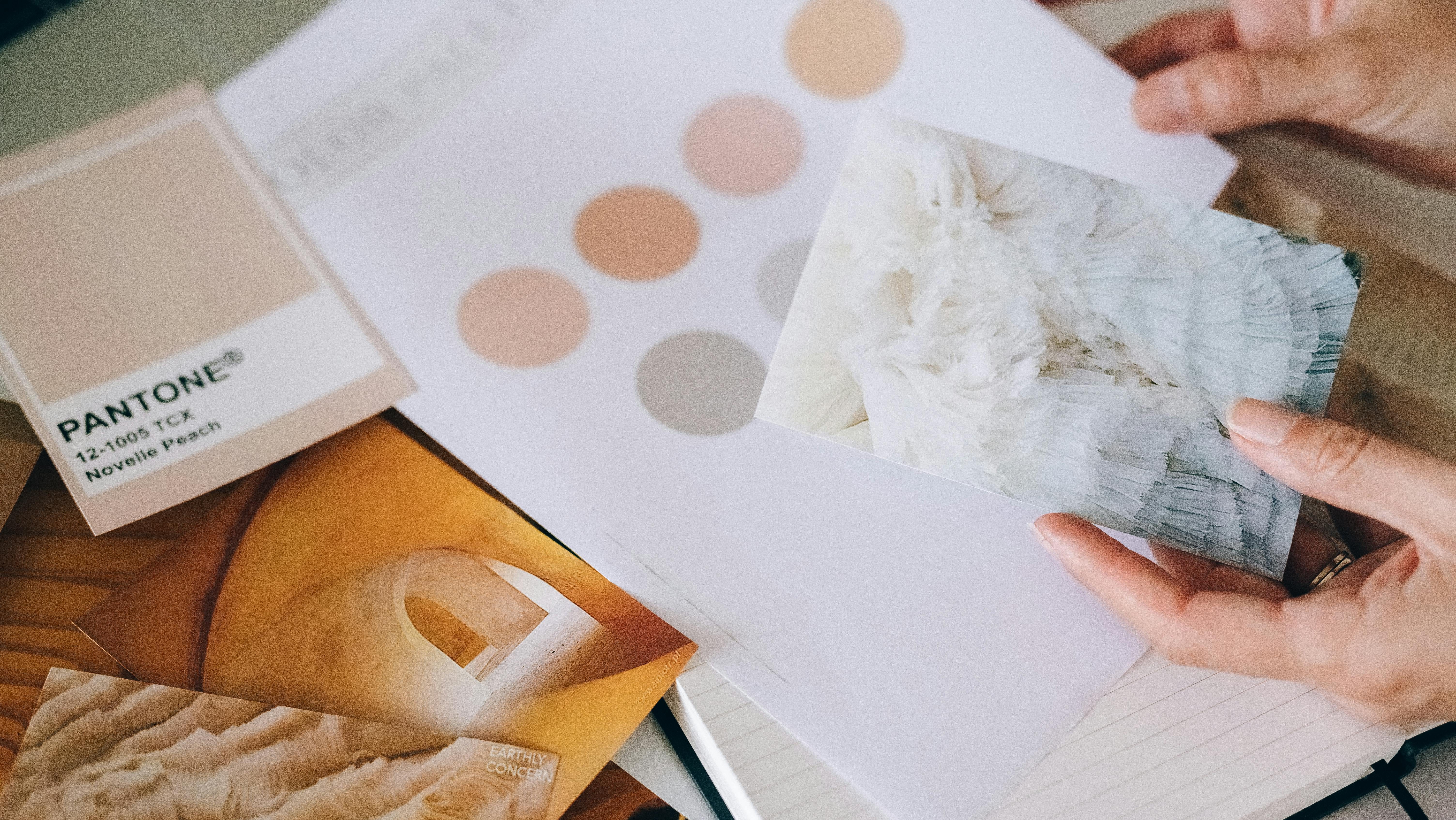
Take your audience insights list and start to create a set of brand guidelines from your list. Perhaps your audience insights show that your audience are calm and minimalist, so a neutral colour palette would be perfect. Or maybe your insights suggest a colourful, over the top bold colour palette. Once you have a rough idea, you can search online for colour palette inspiration and start to develop a collection of about 5 brand colours. Choose one or two as your main colours and the rest as accent colours.
This process also works for fonts. Choose 1-2 fonts. Make sure that they work well together and are suitable for commercial use.
Decide on an appropriate tone of voice (TOV)- how do you want to talk to your audience? Pick 3 words to describe your TOV. My TOV is friendly, informative, encouraging.
Use your brand guidelines to underpin every piece of content you create from now on. That includes social media posts, blog posts, product photography and emails.
3- Be Consistent
Just keep going. It takes time to build a brand identity and it takes time to prove consistency. Just keep showing up and sticking to your brand guidelines and your content will start to feel cohesive and recognisable.

 The Makers Hub